Bridge & Connectivity for MT4 / MT5 Brokers
Connect your trading servers to liquidity venues with a practical bridge and connectivity layer built for routing clarity, lower latency, and operational control. Nexdao supports broker environments that need disciplined LP integration, symbol mapping, execution visibility, and structured go-live coordination.
Topology, bridge logic and venue setup depend on your platform mix, LP relationships, hosting region and operating model.
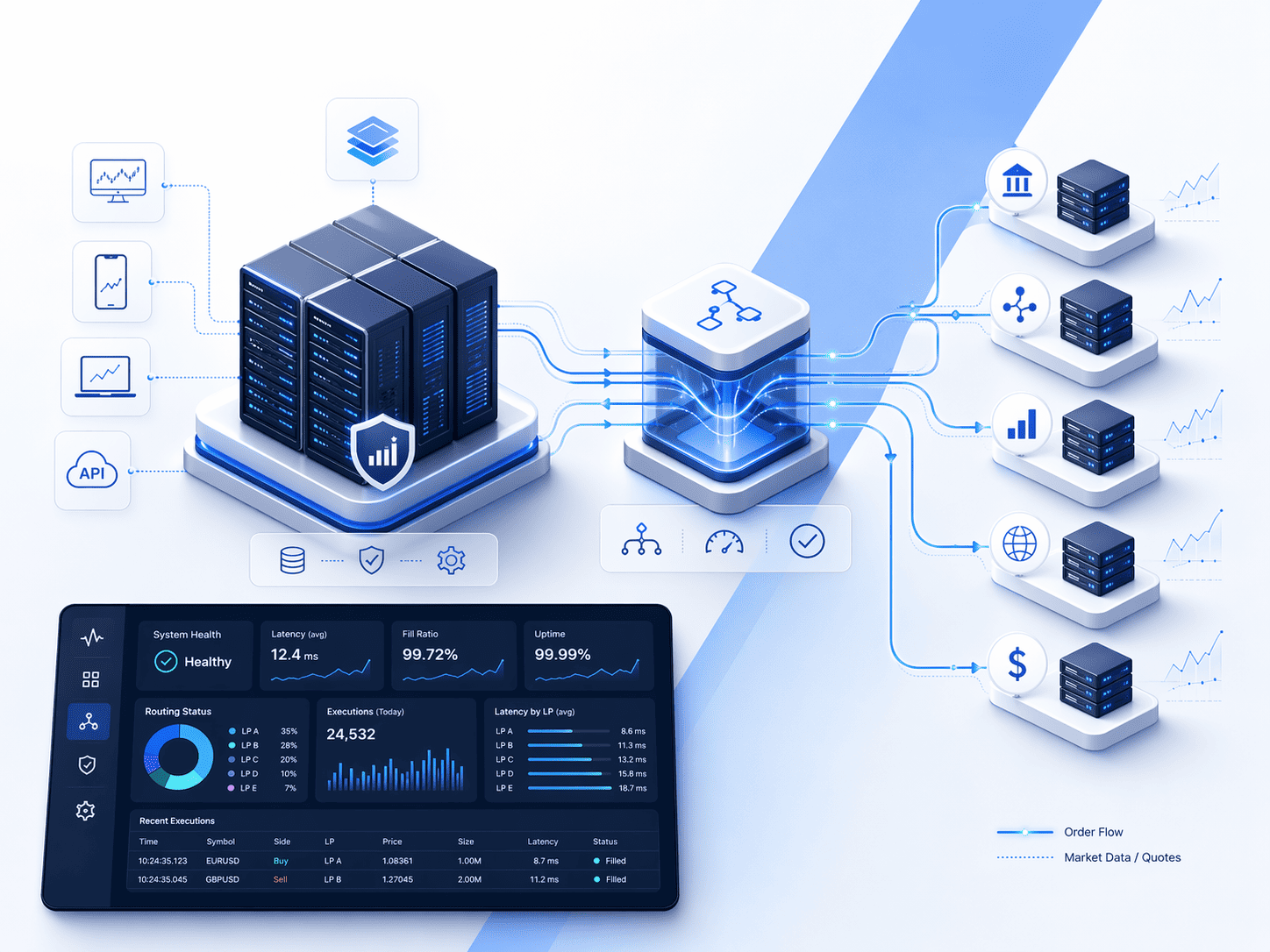
A cleaner execution layer between platform and liquidity
Nexdao helps brokers structure bridge and connectivity environments that are easier to deploy, validate and operate. The focus is not just on technical connection, but on making routing behaviour, venue mapping, and day-to-day monitoring understandable to your operations team.
Multi-LP connectivity
Connect one or more liquidity venues based on your commercial setup and execution design, with structured session planning and operating logic.
Routing logic & profiles
Define how symbol groups, account groups or routing profiles behave so execution rules are consistent and transparent for internal teams.
Execution visibility
Support monitoring, validation checkpoints and operational reporting so the bridge layer does not become a black box after go-live.
Symbol mapping & markups
Align product naming, pricing references and markups carefully so connectivity design reflects the commercial environment you actually operate.
Controlled deployment
Coordinate staging, UAT, change windows and cutover checks so bridge rollout is managed with fewer surprises and clearer responsibilities.
Cross-vendor coordination
Work across hosting, bridge vendors, LPs and back-office stakeholders so connectivity decisions remain aligned with the broader brokerage stack.
Note: Nexdao is a technology and services provider. Nexdao is not a broker, not a liquidity provider, and does not hold client monies.
Bridge design should match the way your brokerage actually operates
A workable connectivity stack is more than a line between MT4/MT5 and an LP. It usually includes account-group logic, product mapping, session management, routing rules, monitoring signals and a clean escalation model when something breaks. Nexdao helps turn these moving parts into a topology your team can own.
Routing transparency
Design routing flows that can be reviewed, tested and understood by technical and operations teams, not only by vendors.
Latency-aware placement
Bridge placement, LP endpoints and hosting region should be considered together to avoid execution bottlenecks and unnecessary complexity.
Need a layout recommendation? Share your LP relationships, deployment region and platform scope, and we can outline a practical bridge architecture.
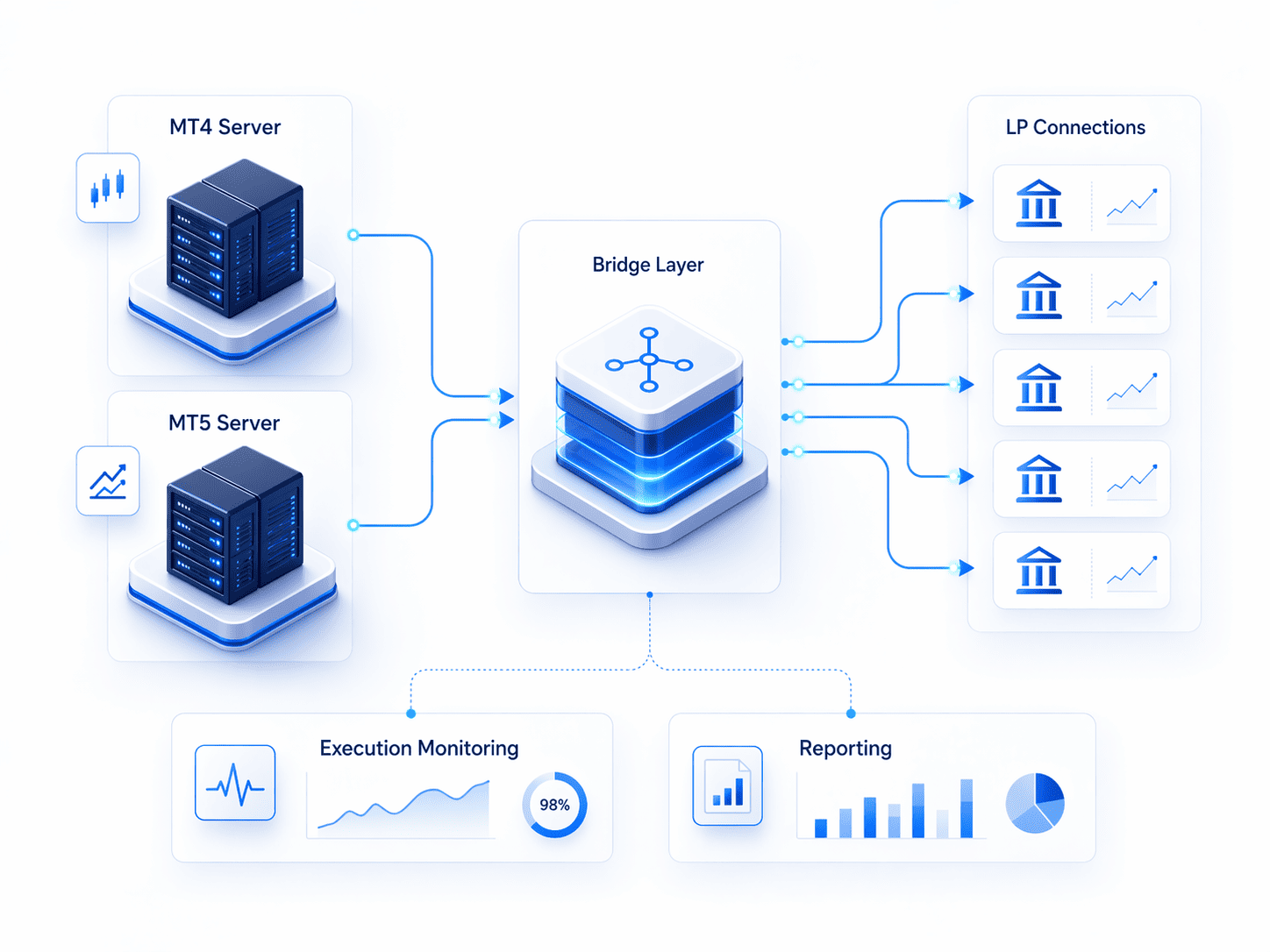
A structured rollout from discovery to live routing
Bridge projects fail when core assumptions are left vague. We structure discovery, mapping, testing and go-live around clear checkpoints so your connectivity layer is validated before it becomes production-critical.
Discovery & scope
Review MT4/MT5 environment, target LPs, symbol coverage, account groups, markups, hosting location and operating responsibilities.
Bridge design & mapping
Define routing logic, symbol mapping, session structure, fallback expectations and the operational model for support and change control.
Connectivity setup
Coordinate technical setup with venue counterparties and supporting vendors, including bridge-side parameters and environment readiness.
UAT & execution validation
Run test flows, validate symbol behaviour, confirm routing outcomes and document any operational exceptions before cutover.
Go-live & monitoring
Move into production with a controlled go-live plan, escalation points, post-launch checks and ongoing visibility into execution health.
What we need from you
Platform details, LP list, symbol universe, account group structure, hosting region, and any operational preferences that affect routing behaviour.
What you get at handover
A documented connectivity setup, mapping notes, testing checkpoints, go-live scope, and clearer operational ownership across involved parties.
Expand resilience and execution control over time
Many brokers do not need the most complex routing stack on day one. Start with a stable baseline, then add layers as volumes, product scope and operational maturity increase.
Additional LP sessions
Add more venues or backup sessions when you need broader coverage, stronger continuity or more routing flexibility.
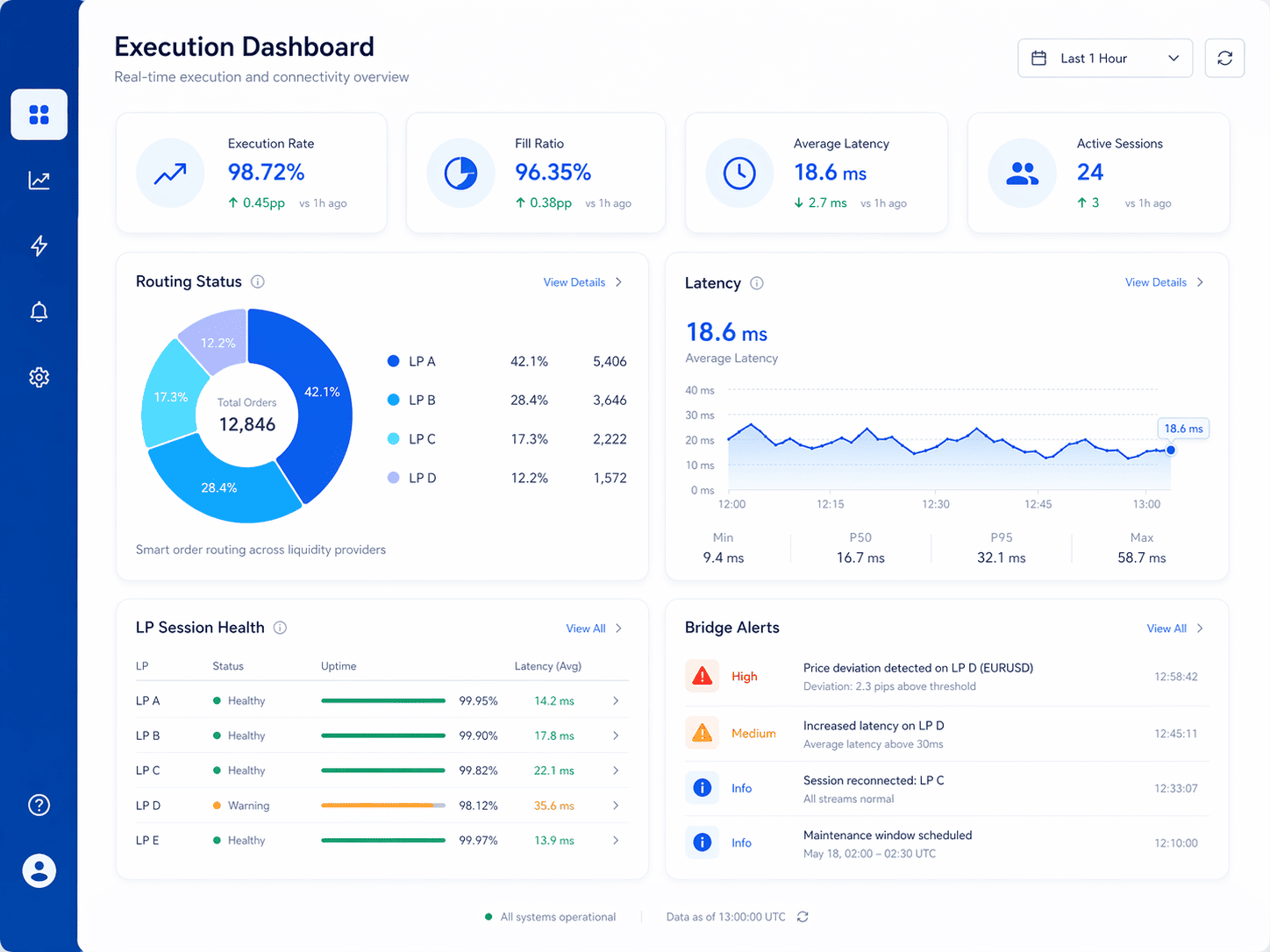
Execution dashboards
Improve observability with focused metrics, exceptions tracking and reporting views for bridge-side monitoring.
Failover planning
Design backup workflows and escalation paths so routing disruptions can be managed with less operational uncertainty.
Common broker scenarios
The same bridge project can look very different depending on business stage and product model.
- Launching a new MT5 environment with one or two LP relationships
- Adding bridge connectivity to an existing MT4 stack that needs cleaner operations
- Expanding from one venue to a multi-LP routing design
- Reworking symbol mapping after adding new products or liquidity sources
- Aligning bridge setup with hosting, CRM/back-office and reporting workflows
Common questions about bridge and connectivity setup
Can you support both MT4 and MT5 bridge connectivity?
Yes. Nexdao can help structure bridge and connectivity workflows for MT4, MT5, or mixed environments, depending on your operating model and vendor stack.
Can you work with our preferred liquidity providers?
Yes. The connectivity layer can be aligned with your preferred LP relationships and bridge-side routing requirements, subject to technical compatibility and session setup.
What is typically included in a bridge deployment project?
Typical scope includes requirements discovery, symbol and account-group mapping, LP session alignment, routing logic review, UAT validation, and monitored go-live coordination.
Can we start with one LP and add more later?
Yes. Many brokers begin with a simpler connectivity setup and later expand to additional LPs, backup sessions, or more advanced routing logic as the business grows.
Do you also support hosting coordination?
Yes. Bridge placement and LP connectivity often need to be aligned with hosting design. Nexdao can help coordinate the connectivity side with your hosting environment and operational workflow.
Need a tailored bridge proposal? Send your platform details, LP list, target region and product scope, and we’ll outline a practical connectivity plan.
Talk to Nexdao about your bridge architecture
Tell us your platform mix, LP relationships, deployment region and operational priorities. We’ll respond with a bridge and connectivity approach, scope boundaries, and a rollout plan that fits your brokerage environment.
Quick checklist
- Platform scope: MT4 / MT5 / both
- LP and venue list
- Target region: LD4 / NY4 / other
- Symbol coverage and account groups
- Monitoring and support expectations
Disclaimer: Nexdao is a technology and service provider. Nexdao is not a broker nor a liquidity provider and does not hold client monies.